
The past few weeks have exposed something Apple usually manages to hide well: strain. Four senior leaders announced their exits in quick succession. AI teams continued to thin out. And the possibility of Johny Srouji even considering an exit rattled the broader Apple community in a way few executive rumors ever do (only rumors on Craig leaving would top it).
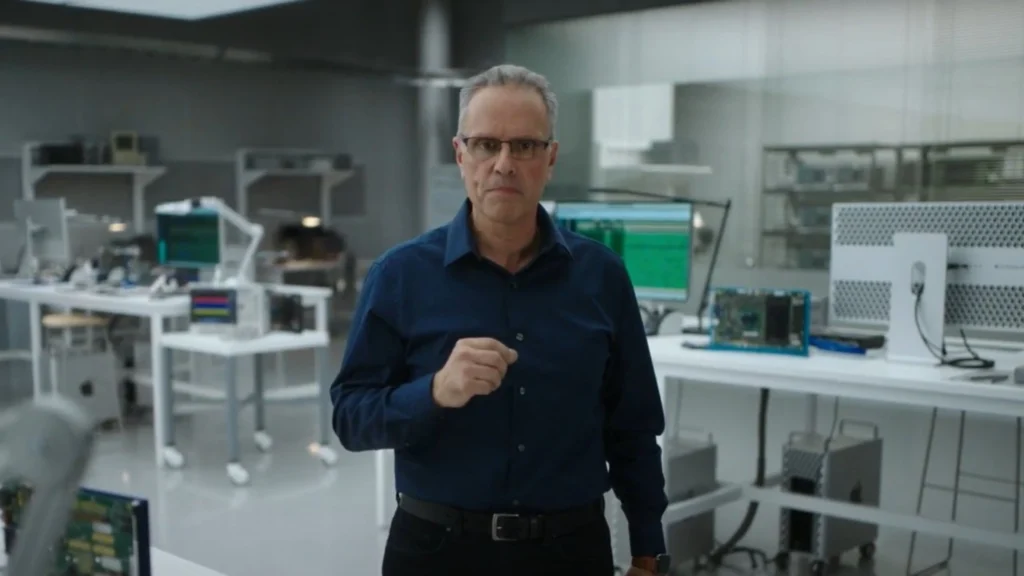
For the past decade, Srouji has been the force behind Apple Silicon, the company’s most significant and defensible advantage. The idea of that pillar shifting, even hypothetically, landed with some serious concern. His internal comments on Monday, saying he doesn’t plan to leave anytime soon, restored some stability. But it didn’t erase the underlying point: the fact that the rumor spread so quickly reflected how sensitive this moment already is. If nothing else, it underscored how much confidence Apple’s recent transitions have asked the public and its own employees to extend. A figure like Srouji entering the conversation, even briefly, sharpened that tension.
Apple’s AI situation is the clearest example. Siri’s promised overhaul is still late. Apple Intelligence arrived with caveats rather than conviction. Meta, OpenAI, and various startups have been able to recruit Apple researchers at a pace that would have been unthinkable five years ago. Talent leaves when momentum slows, when vision becomes vague, or when the work feels more defensive than generative. Apple is dealing with all three.
Design is having its similar moment. If you’ve followed the trajectory of Apple design since Jony Ive left, Alan Dye’s departure is hardly a surprise. Apple has struggled to articulate what replaces the Ive era beyond incremental refinements and a return to practicality. A leadership vacuum in design does not break Apple overnight, but it does mark a breath of fresh air, especially when AI and UI beauty are supposed to define the next decade.
Taken together, the retirements add another layer: Kate Adams, Lisa Jackson, Jeff Williams, and the slow unwind of Luca Maestri’s role. None of them is individually shocking. Together, though, they thin out the top of the organization at a moment when Cook needs stability. Yes, a company this big can absorb turnover, but when the same small circle of experienced operators starts to disperse, the cost shows up later-on in slower decisions, less institutional memory, and a culture that loses its internal anchor.
For all its talk of long-term vision and deep benches, the company has always depended on a small set of people who held the center quietly. When they leave, the surface looks calm, but underneath, the teams start to drift. You can see signs of that now in the way the Apple Intelligence has been handled, in the the lack of a robust smart home product strategy, and in the sudden need for Cook to intervene directly in retention.
Srouji staying gives Apple time, but it doesn’t solve the problem at the heart of the matter. The company is being challenged by competitors that move faster, compensate more aggressively, and are willing to rebuild foundations that Apple keeps trying to patch. The industry has moved on, and Apple is torn between its love of control and the velocity of modern development.
The uncomfortable truth is that how much has changed is something Apple has been slow to admit. It still talks about innovation as if the cadence of the last decade can carry into the next one. But new categories do not arrive on schedule, and AI has rewritten the dynamics of competition. The company is not collapsing, but it is not keeping pace either.
Apple needs an amber alert. The departures, the poaching, the stalled initiatives are not isolated occurrences but a message. Whether Apple considers this noise will determine if it becomes a long-term issue. Thankfully, Apple has the talent and the discipline to right its course.
Apple has been counted out many times before, and the predictions rarely age well. The company’s strength has never come from avoiding difficult moments but from using those as an opportunity to recalibrate. Each period of disruption: Jobs’s passing and after the Ive era, forced Apple to refine what it wanted to be next.
This moment is no different. The company will find its footing. The question now is whether Tim Cook sees this moment for what it actually is, not what he wishes it could still be.