
Historical note — reviewed August 8, 2026: This opinion was published on December 15, 2022, before Apple implemented the EU’s Digital Markets Act requirements. The European Commission describes the DMA as enabling alternative app stores and direct web distribution. Apple introduced alternative marketplace distribution with iOS 17.4 in March 2024 and later added Web Distribution; Apple’s current documentation says alternative-distribution apps undergo Notarization and describes system installation disclosures. The argument below is preserved as a 2022 forecast, not a measured verdict on the later rollout.
Among those criticisms that are frequently invoked on behalf of the practice of sideloading apps on iPhone is one that appears otherwise obvious: if you don’t want to sideload an app, then don’t.
It’s a tempting proposition — leave it up to the user as to where they’d rather download their apps from. But beneath that seemingly simple elegance is a reality that is much more complex and multifaceted, because sideloading is not simply some lone feature that can be turned on or off by Apple willy-nilly. Rather, it would fundamentally change how the iPhone works, what people expect from it, and the experience of using it.
Yesterday, I discussed some of the questions that Apple engineers would need to answer in complying with the EU’s Digital Markets Act: What is a sideloaded app? Does it gain access to system APIs and privileges? How is its privacy protected when it is not from the App Store? These aren’t trivial questions; they impact almost everything in iOS.
My concern in 2022 was that, if Apple followed the broader distribution model I had seen on Android, some developers could choose to leave the App Store and concentrate on proprietary distribution channels. If widely used apps did that, users could face fewer practical distribution choices rather than more. That was the risk I saw, not an established outcome of Apple’s later EU implementation.
The App Store is no gem itself, of course — far from it. Scams sometimes slip through, enforcement can be spotty, and Apple’s rules can seem arbitrary rather than clear. Despite those flaws, I still see the App Store as providing a baseline of confidence and certainty that is difficult to match. I find its defects easier to tolerate than the chaos of switching among multiple distribution systems.
Apple cannot simply do without the App Store right now, and neither can its customers. The App Store is more than a commercial proposition; it is actually the very foundation of what makes the iPhone’s sense of self. Without the App Store as part of the equation on this device, it becomes simply a very expensive camera with no sense of core or direction.
The practical risk I had in mind was that a large developer such as Meta could choose to offer WhatsApp, Instagram, or Facebook through another permitted distribution channel, and that Spotify, Telegram, or others could make a similar choice. My concern was fragmentation — not a claim that those companies had done so, or that alternative distribution would operate without platform rules or Notarization.
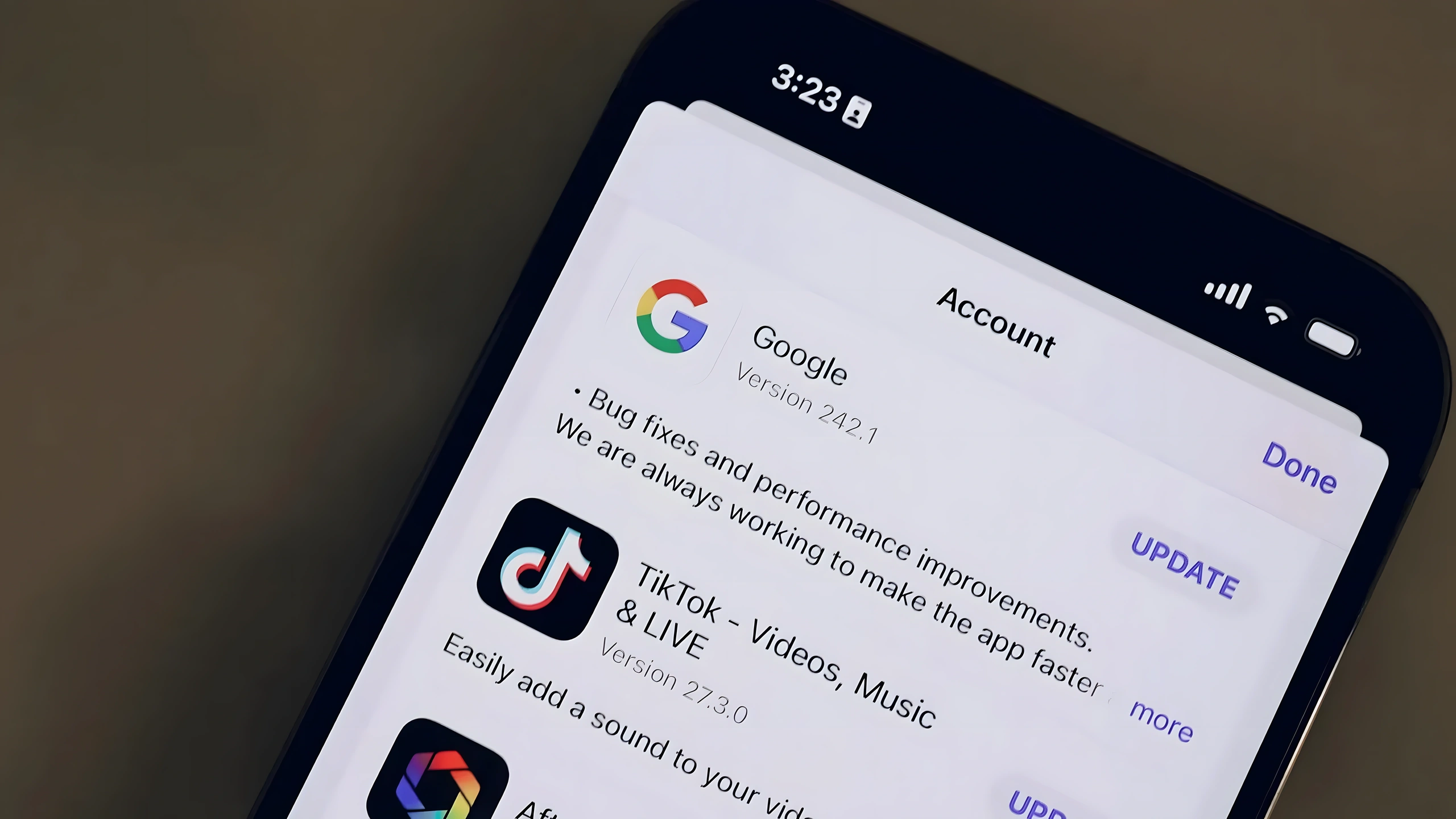
Even in a scenario where you yourself never bother taking the step to download a sideloaded app on your device, the effects of this phenomenon will nonetheless spread and reach you. When leading devs begin to abandon traditional App Store protocol, it is probable that we would have no choice as ordinary users to do so as well. Updating applications would become a nightmare scavenger hunt experience — with WhatsApp downloadable on one particular site here, Spotify on another site there, a home-security program on a third site altogether — with new login info needed for all of these, as well as accompanying risks and points of weakness.
There is no question that some subset of developers would certainly gain immensely from the practice of sideloading. Apple’s strict and closed-minded approach to this question has resulted in excluding whole categories of applications — emulators, simulators, and many others that undoubtedly deserve a rightful place and platform for their ingenuity. But it is well to remember that these particular edge cases are not worth more than the wider and far greater expense that would be involved in breaking up the healthy ecosystem that exists to support over a billion people on this planet.
Android was the counterexample people most often raised in 2022 because it supported a broader range of app-distribution choices. My point was not that every major Android developer relied on direct distribution; it was that changing iPhone distribution could change the incentives of both platform owners and large developers. That remains an argument about incentives, not evidence that any particular company would leave a store.

Mark Zuckerberg’s ongoing and repeated criticism of Apple is not fundamentally about advocating for freedom. Instead, it fundamentally revolves around the concept of leverage in the competitive tech landscape. Meta seeks to access Apple’s extensive platform capabilities while conveniently sidestepping Apple’s guiding principles. They desire the vast reach that comes with such a platform but want to avoid the restraints that those principles impose. If given the opportunity, Mark Zuckerberg would eagerly position himself at the forefront, ready to completely bypass the App Store in its entirety.
Lastly, one should also understand that this is not simply a question of exerting control as a form of exerting power or authority. It is rather based on principles of design coherence and correlative responsibility. The protocol that Apple has developed is constructed at its foundation on a pact of trust between the company and its user base: when you choose to load up some program from the App Store, you may do so with assurance that it will act predictably and reliably.
If that relationship is violated or abrogated, then you are breaking the promise that is central to defining the iPhone experience on behalf of its user base. Freedom in technology is not to do everything. It is to decide what you are not going to compromise on. Sideloading might be presented as a choice, but it enforces it, dispersing what Apple had developed over 15 years into the ordinary, the inconsistent, and the unsafe.