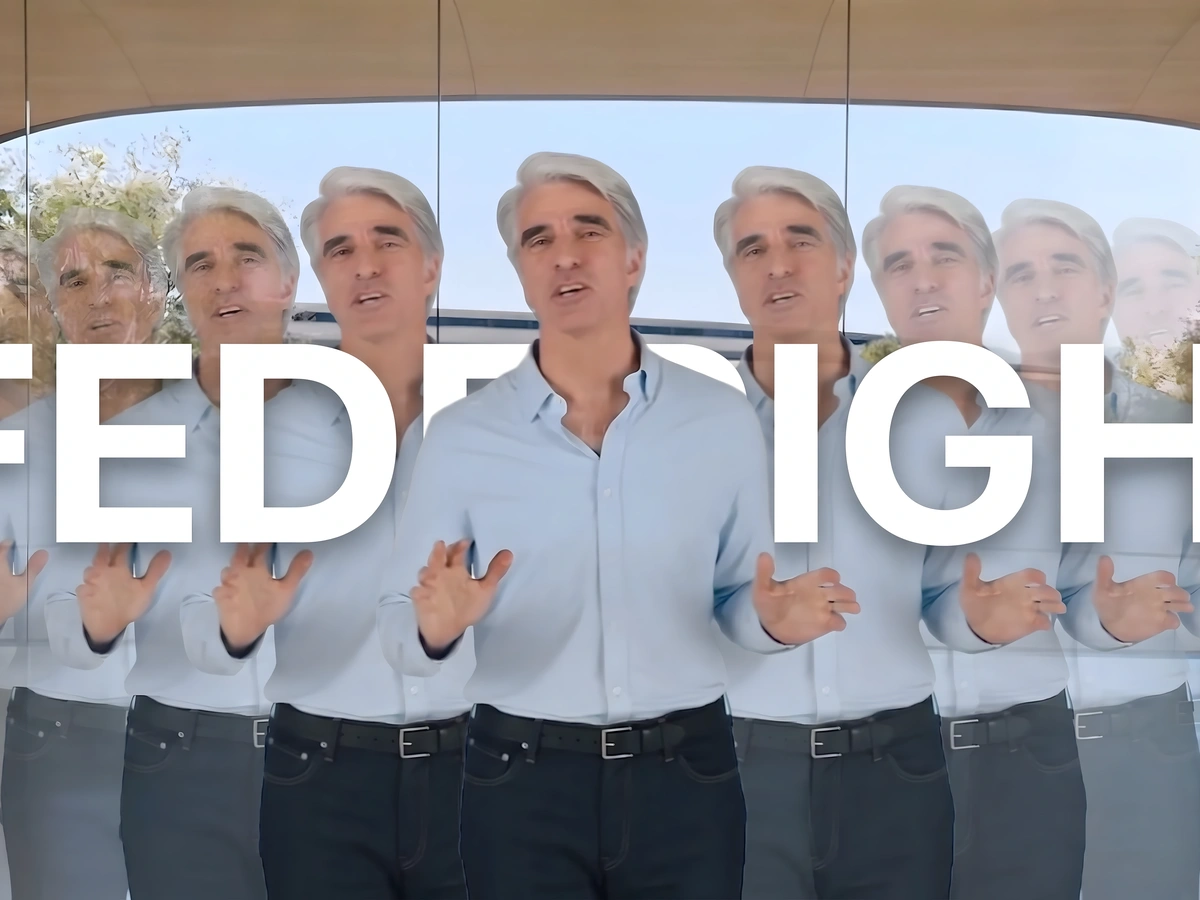

I want to tell you something I noticed while writing about iOS 27 since WWDC 2026, because I think it is more revealing than any press release.
I keep calling it OS 27.
Not iOS 27, or macOS 27, or even the OS 27 suite. Just OS 27. As if there were one thing, shipping this fall, across every Apple device you own. I caught it a few times and changed it back. Then I stopped changing it back because it started to feel like a more accurate description than spelling out every platform individually.
To clarify the matter, Apple is not coming out with one OS. What the company has stated, many times over and on the record, is that it does not intend to combine any of its platforms. The oft-cited quote from Tim Cook in 2012, “You can converge a toaster and a refrigerator, but those things are probably not going to be pleasing to the user,” has long stood as the de facto statement of the Apple platform strategy and has been echoed multiple times over the past decade. It was a good quote, but it was also a classic case of companies saying something before doing just that.
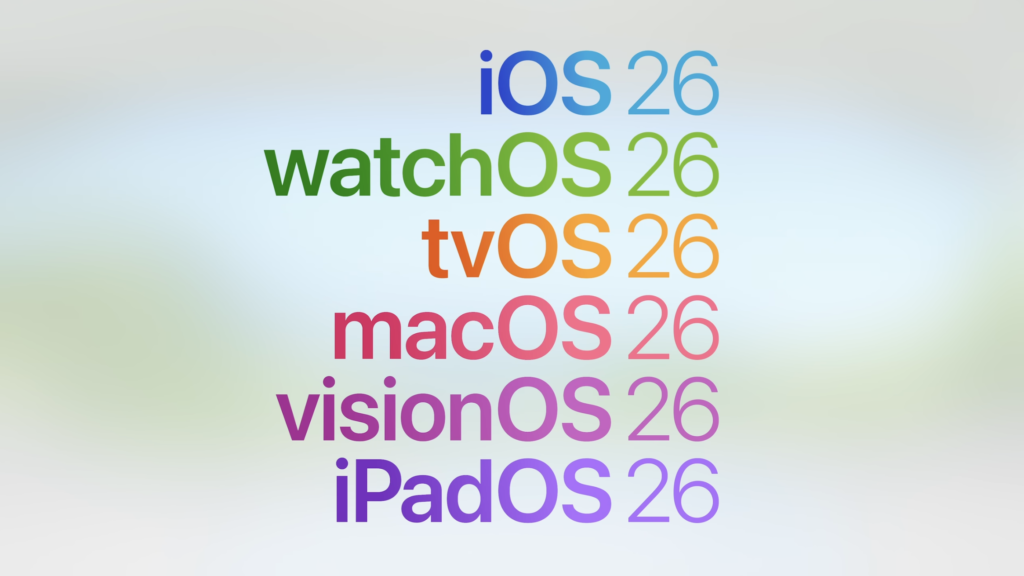
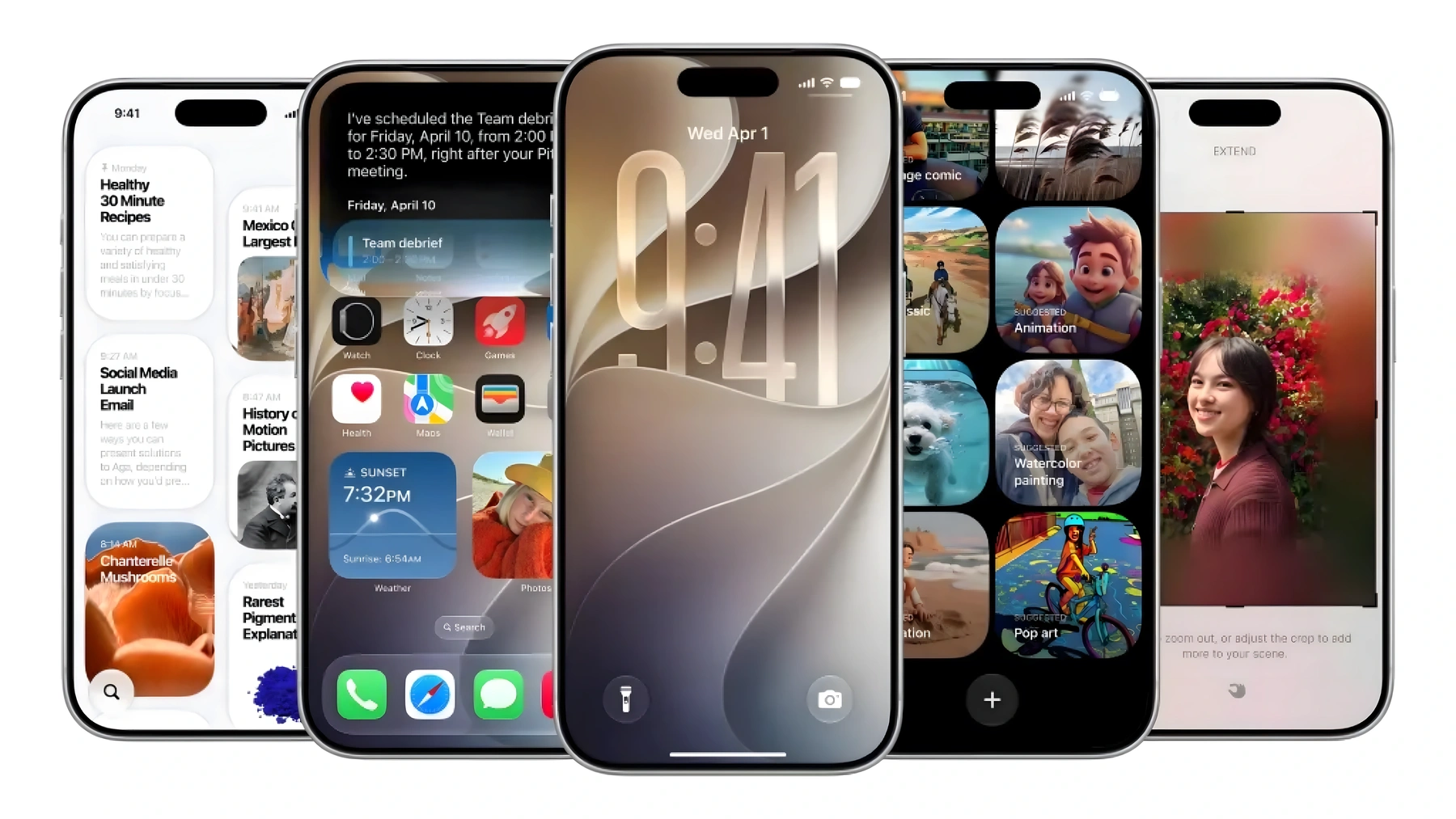
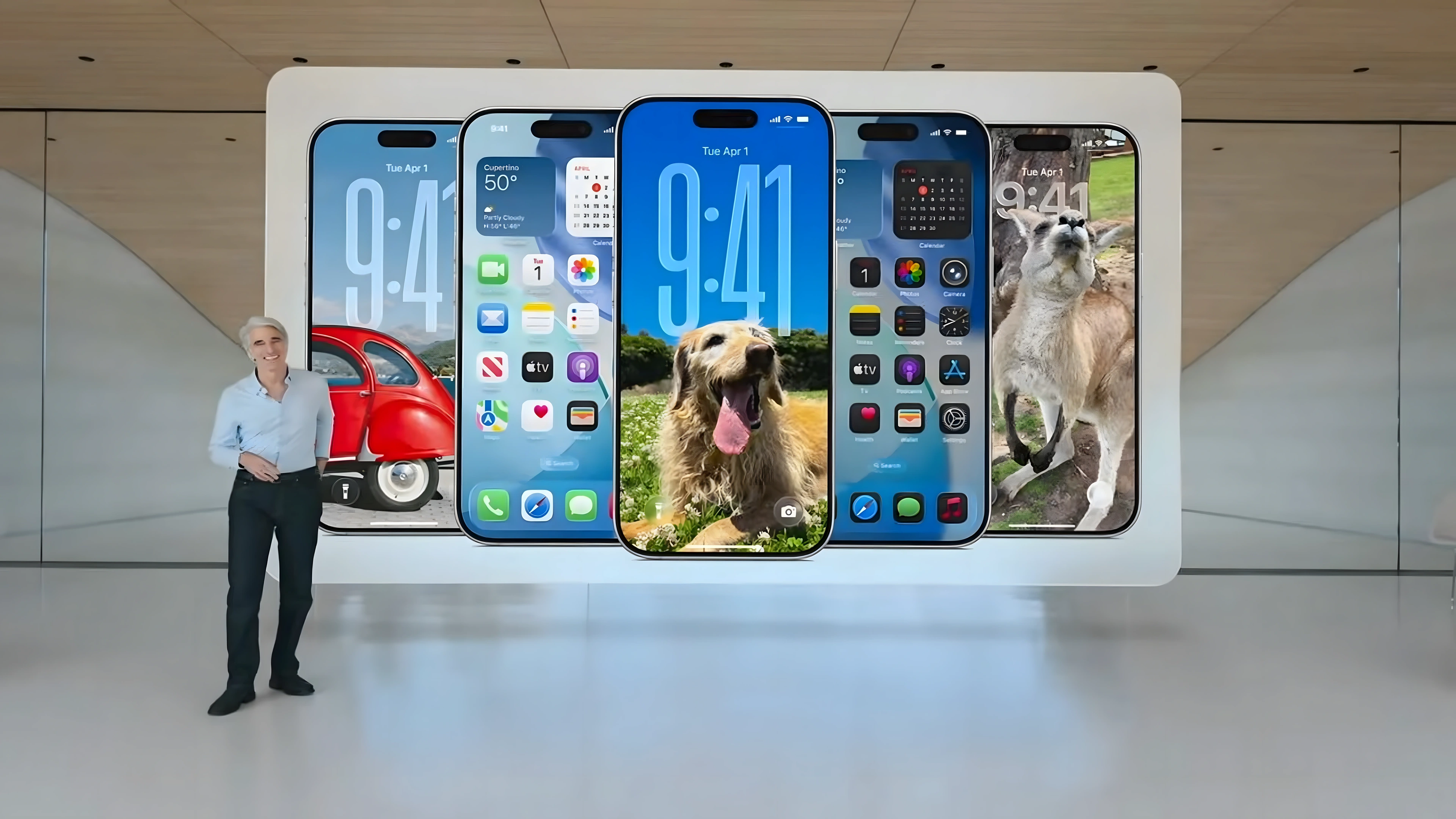
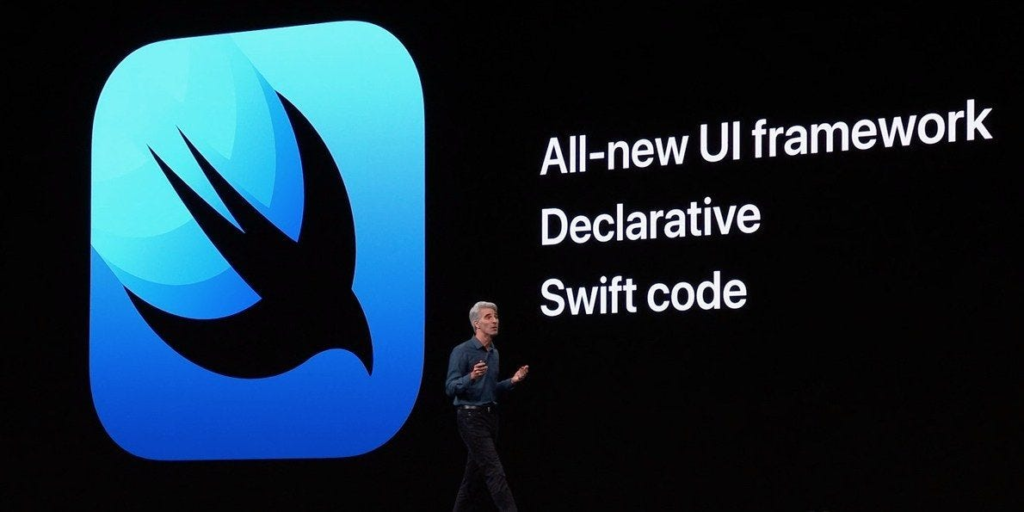
Beyond the facade of Siri AI and more liquidly Liquid Glass, this is what Apple presented at dub-dub: one Apple Intelligence story spanning supported devices, with features and availability that still vary by hardware; an updated Liquid Glass design language shared across Apple’s screens; features advancing across iOS, iPadOS, macOS, tvOS, watchOS, and visionOS; and developer frameworks that increasingly blur the work of writing for one Apple platform versus another. Apple silicon supplies a common architectural foundation, but macOS 27 does not erase Intel compatibility: Apple says Rosetta remains available through macOS 27 and becomes limited to certain older games in macOS 28. As I later explored in the Gemini foundation behind Siri AI, the intelligence layer is shared strategically, not implemented identically on every device.
One. One. One. One. One. One. These are still six operating systems, officially. My argument is that Apple is increasingly telling one platform story across them, even if Apple has not called that story “AppleOS.”
You can see part of the pattern in Apple’s WWDC26 newsroom coverage. Rather than publish separate releases for every operating system, Apple led with feature stories spanning multiple platforms, including Siri AI and Apple Intelligence. That editorial structure supports my convergence thesis, but it does not prove Apple has merged its operating systems or permanently abandoned platform-specific announcements.
Apple may simply have structured that coverage around the year’s biggest cross-platform stories. My narrower point is that, at this event, Apple chose to tell feature stories across products rather than six isolated platform stories. That is evidence of convergence in Apple’s communications, not evidence that one underlying operating system already exists.
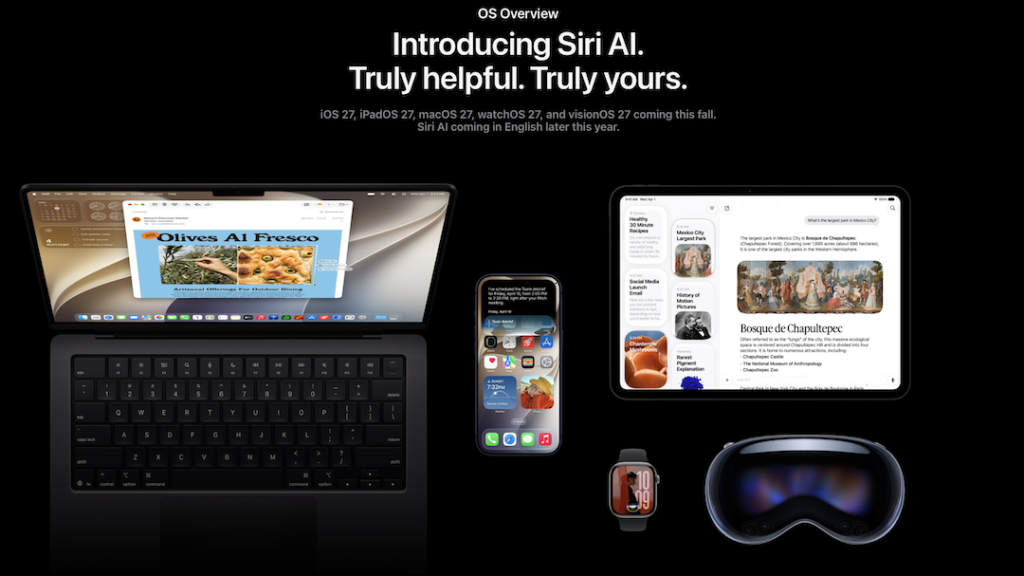
The same pattern appears on Apple’s platform preview pages for iOS 27, macOS 27, and iPadOS 27. They repeat much of the same feature language while changing the device-specific visuals and details. Siri AI, Visual Intelligence, Writing Tools, and performance improvements recur across the pages. To my eye, the pages increasingly read as variations on a shared platform story, even though Apple continues to publish and maintain them as distinct operating systems.
This is reflected in the coverage as well. This week, all of the major news sources wrote their recaps of the WWDC as a unified piece. iOS 27, macOS 27, iPadOS 27, all released together because they were all released together. The title of every one of these pieces of news could very easily have read, “Apple previews OS 27.”
Before getting too excited about where Apple is heading, it is worth spending a moment with the company that tried to get here first and failed so completely that the attempt became a cautionary tale the entire industry memorised.
Microsoft introduced the Universal Windows Platform with Windows 10 in 2015 as a common app platform spanning multiple device families. Microsoft’s current guidance says UWP remains supported but is no longer under active development, and recommends the Windows App SDK and WinUI for new Windows apps. That makes UWP a useful cautionary comparison, but not a direct one-to-one precursor to Apple’s strategy.
The lesson is narrower than “unification fails.” Microsoft’s own platform guidance evolved as its device strategy changed, and new client development moved toward the Windows App SDK. Hardware diversity was one constraint, but the public record does not establish it as the single cause of UWP’s trajectory. My comparison with Apple is analysis, not Microsoft’s explanation of what happened.
The difference I am drawing is hardware control. Microsoft’s platform had to span a vast range of manufacturers, configurations, and device categories. Apple designs the hardware, silicon, operating systems, and many of the frameworks together. That tighter integration may make cross-platform coordination easier; it does not guarantee one OS, make Apple’s devices identical, or prove Apple cannot repeat Microsoft’s mistakes.
This is where Apple got it right by beginning with the hardware. When it announced the Mac transition in 2020, Apple said the move would create a common architecture across its products. That does not mean the same processor powers an iPhone, MacBook, iPad, and AirPods; Apple designs different systems-on-a-chip for different jobs. It does mean Apple’s software teams and developers work from a far more coherent hardware foundation than they did before the Mac transition. What Apple is doing now on the software side rests on that earlier hardware work.
Third-party reports have described a book-style foldable iPhone, but Apple has not announced the product, its name, its dimensions, or a September release. The WWDC foldable clues I examined separately make that possibility interesting, not confirmed. If Apple ships a phone that unfolds toward tablet size, the distinction between iOS and iPadOS would become part of the product story. That is the implication I am interested in here.
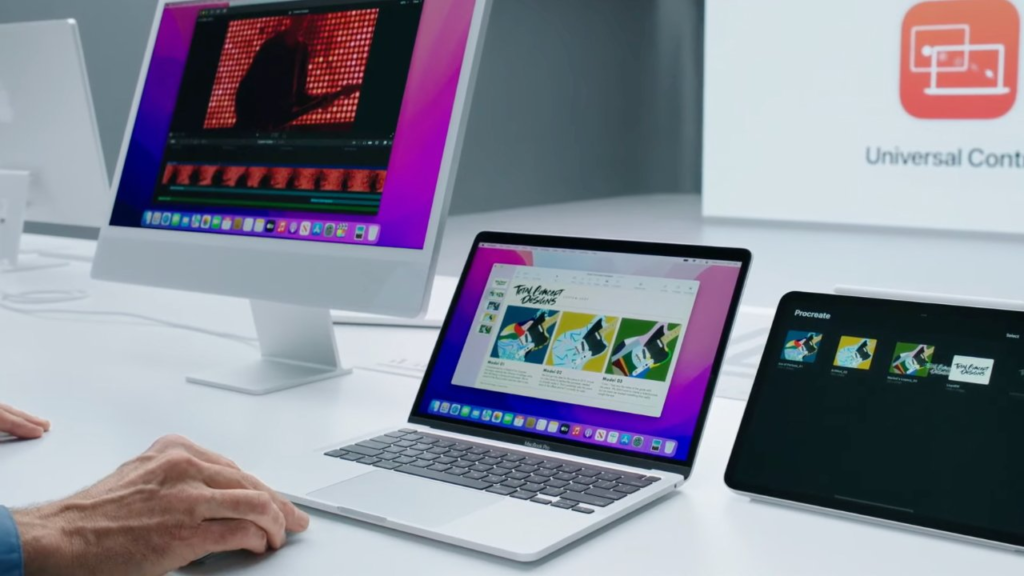
Reports have also pointed to a future touchscreen Mac, but Apple has not announced one. What Apple has documented in macOS 27 is narrower: Sidecar touch support lets compatible Mac apps respond to finger gestures on a connected iPad. That is a real shift in how a Mac app can receive input through Sidecar; it is not confirmation of a touchscreen MacBook Pro.
Now hold those two things together. A foldable iPhone that is iPad-sized when open. A Mac you can touch. An iPad that can mirror a Mac. An iPhone that can mirror an iPad. The clean taxonomy Apple has maintained since 2007, this device is a phone, this one is a tablet, this one is a computer, is dissolving in real time, and the operating systems named after those categories are going to have to dissolve with it.
iPadOS exists because the iPad needed features that Mac did not have and iPhone did not need, and because Apple wanted to develop them on a separate track. That logic made sense when an iPad was clearly a tablet and a Mac was clearly a computer. It could make considerably less sense if Apple ships a phone that unfolds toward tablet size, runs apps across a dynamic range of aspect ratios, and shares an intelligence layer with the rest of the lineup. That remains a hypothetical. If it happens, keeping iPadOS tied to “iPad-marketed hardware” will require an increasingly tortured definition of what that hardware is.
Apple will not announce Apple OS at WWDC 2027. It might. It probably will not, at least not in those words. The more likely path is the one Apple has always preferred: ship the thing, let people use it, let the name catch up to the reality. The version numbers already unified. The intelligence layer is already unified. The hardware is already unified. The frameworks are unifying. The press releases are already written as if there is one OS.
Apple may never say it in those words. My prediction is simply that the distinction will matter less over time: the version numbers already align, the intelligence story spans platforms, the hardware foundation is more coherent, and the frameworks continue to converge. “AppleOS” is the name I use for that direction, not a leaked brand or a promised announcement.
The toaster and the refrigerator. Tim Cook was right that you do not want to combine them. Apple, to its credit, did not combine them. It just made them run on the same power source, share the same internal components, respond to the same voice, and understand the same language.
Open them both up, and the insides are the same.