
To be blunt, when news about iOS 27 began trickling out late last year, with an emphasis on stability, increased performance, and a Snow Leopard-style reset, my immediate response was slight disappointment. Having waited two whole years for something called Apple Intelligence, another year sounded like too much more of the same.
Then WWDC happened, and I changed my mind.
As far as my initial response to watching the keynote went, it was definitely not one of excitement. It was the flatness that followed my request for a boring WWDC. Apple came through with Siri AI — finally, really, as an actual product and developer beta — and my immediate reaction was: Okay, great, that is what you promised two years ago. I could not stand up and applaud Apple simply for reaching its promised goal.
As time passed during the evening and I sat through it, zooming out from the individual updates to the bigger picture, I figured out that I had misread the message completely.
I am incredibly excited about Apple now. I don’t think that I have been able to state that clearly in a few years now.
Here’s why.
Search got a total overhaul, and Mail got a new ranking system. Apple says iPhone and iPad apps launch up to 30 percent faster and AirDrop transfers are up to 80 percent faster. Those are Apple’s own test results, not guarantees: the app-launch test used an iPhone 11 Pro Max after many cycles of use, while the AirDrop test used an iPhone 16 Plus transferring 30MB of photos while off Wi-Fi. The Apple-silicon transition makes the stack more coherent, which is part of why OS 27 feels like one platform to me, but Intel compatibility is not entirely behind us: Rosetta remains available through macOS 27. Wi-Fi handoff is more intelligent. I could go on.
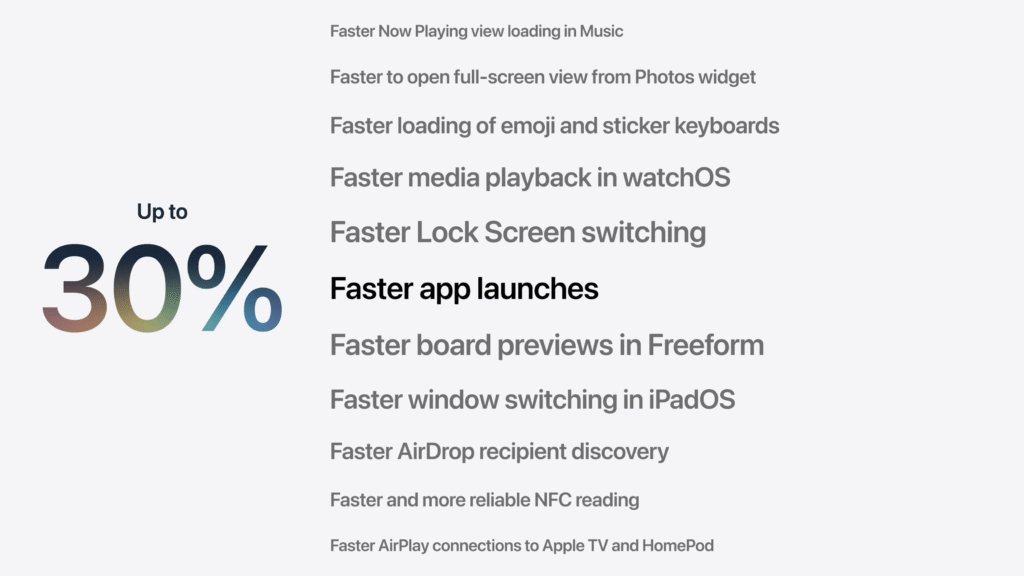
Apple went from top to bottom. Line by line, clearing the table of issues that have plagued iOS, macOS, and iPadOS users for years. And when Apple clears the table, the only real question is: what are they cooking?
In short, stepping back, I saw iOS 27 as the software foundation for a reported set of new form factors and interfaces. That is an ambitious possibility, not an Apple-confirmed eighteen-month roadmap. Everything that follows depends on distinguishing the software Apple shipped from the hardware other sources say may come next.
First up in the rumor column is a foldable iPhone. Apple has not announced the device or a September release. What Apple did confirm is that iPhone apps can be fully resizable in iPhone Mirroring on Mac and when running on iPad, with developers told to adapt to the available scene size. That confirmed adaptivity work is the basis of my foldable reading; it is not proof that the rumored hardware exists. The road may have come before the car, but Apple only showed us the road.
Reports also point to a future MacBook Pro with a touchscreen and OLED display, but Apple has not announced that hardware, its features, or its timing. What Apple did introduce in macOS 27 is Sidecar touch support for Mac apps. That is a meaningful software change and a useful clue; it is not a touchscreen Mac announcement.
More precisely, a compatible Mac app can adopt gesture recognizers so a person can interact with it by touch on a Sidecar-connected iPad. The finger input happens through the iPad and Sidecar; Apple’s documentation does not turn the Mac’s own display into a touchscreen.
Then there is the reported “HomePad,” the not-so-creative shorthand for a HomePod-and-iPad-style device. Apple has not announced that product, its display, its camera, or the reasons for any internal delay. My argument is conditional: if Apple builds a home display around the new Siri AI foundation, software readiness will matter as much as the hardware.
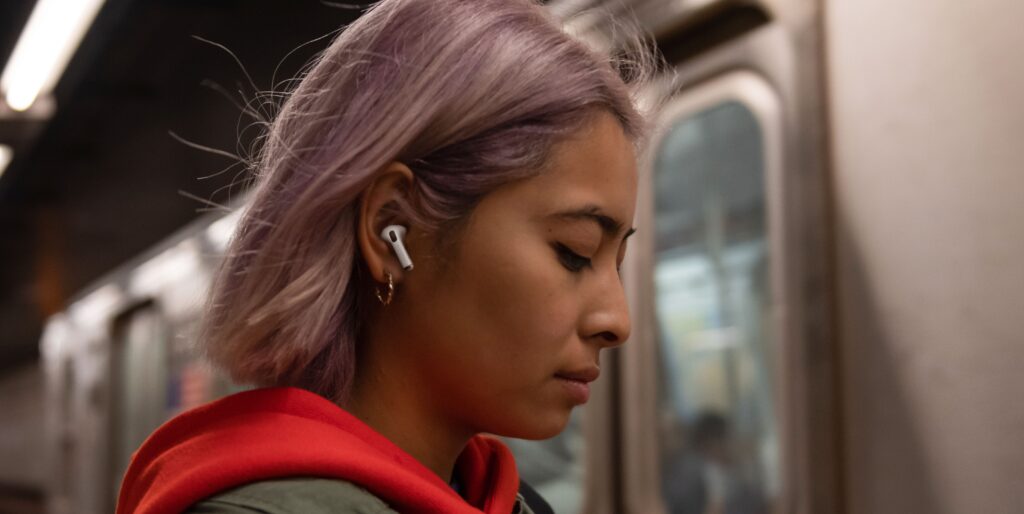
Camera-equipped AirPods are another reported possibility, not an announced product. If Apple eventually uses wearable cameras as a Visual Intelligence input, Siri AI and iOS 27 would be the software foundation. For now, that is a conditional argument, not a shipping claim.
The pendant is the most speculative item in this list. Apple has not announced a camera-and-microphone wearable, and I do not treat it as a product-roadmap fact. It is useful here as a thought experiment: what kinds of hardware become plausible when Siri can understand context away from a screen?
Bloomberg reported a display-free Apple glasses project, the codename N50, and a possible late-2027 release. Apple has not confirmed the project, codename, feature set, or date. If the report proves accurate, its reliance on iPhone and Siri AI would fit the software-first pattern I see in iOS 27 and visionOS 27.
This is what I believe people miss about Apple in all their daily coverage. Apple never telegraphs its punches. It does not call a press conference to say that it will soon be doing something amazing. It simply and systematically builds the foundations for what it is going to do, until one day in September, everything is already in place and ready to go.
This has happened before. There was no App Store when the original iPhone went on sale on June 29, 2007. The App Store opened on July 10, 2008 — about a year later, not fifteen months — on top of infrastructure Apple had already created. Apple announced its Mac silicon transition as a roughly two-year project after years of internal work. Apple Watch likewise evolved through successive hardware and watchOS releases. The pattern is the point: foundations often arrive before the product story is obvious.
Taken as a rumor set rather than a confirmed roadmap: a foldable iPhone, a touchscreen Mac, AirPods that can see, a HomePod-and-iPad-style device, smart glasses, and a strange little AI pendant that may never ship. Apple’s CEO transition is official; tying a future CEO’s first product announcement to a foldable is not. If even some of the product reporting proves accurate, these are the preparations for Apple’s biggest swing in years. That possibility — not certainty — is what excites me.
This is the reason why I am excited. It’s not for iOS 27, which is a stability release with a fantastic Siri tacked onto the top, but rather for the message that iOS 27 sends. The wiring is set up. The foundation is laid. The walls are squared.
Something extraordinary is coming. I can feel it in the plumbing.